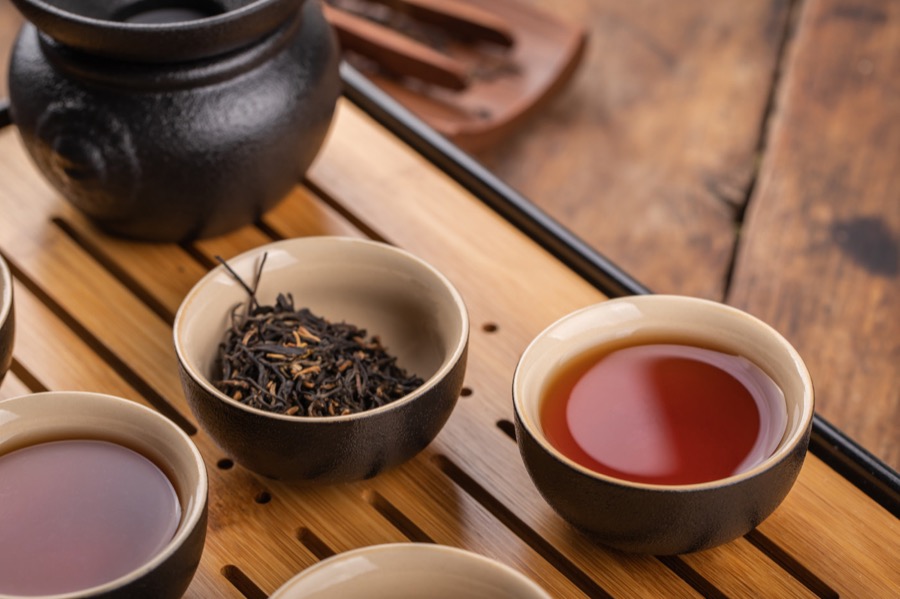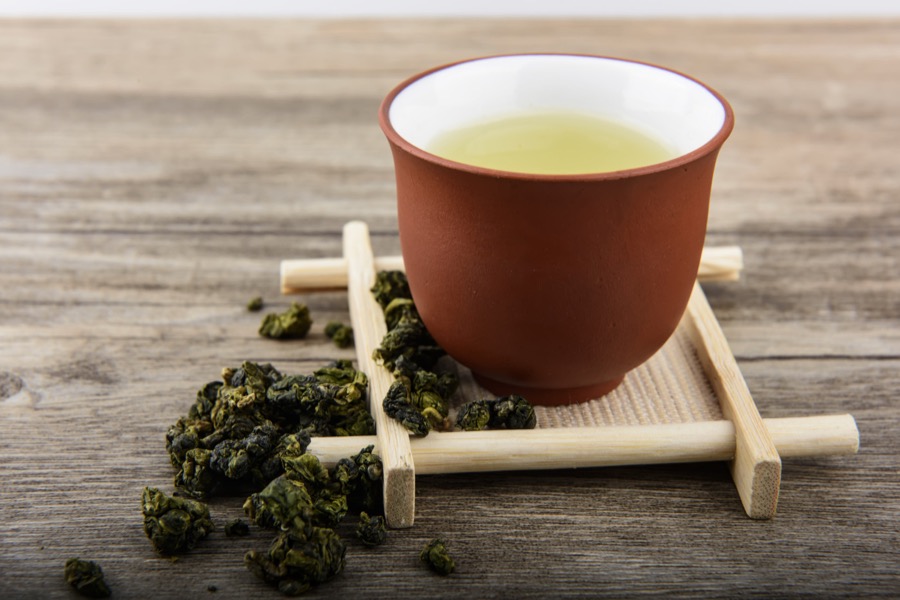
Pu Erh tea originates from the Chinese province of Yunnan and is the only true tea variety that is not obtained from the camellia (Camellia sinensis), but traditionally from wild tea bushes (Qingmao). Its aging process is characteristic: during production and storage, microorganisms are active, changing the tea leaves over time and breaking down bitter substances and tannins – similar to the aging of wine.
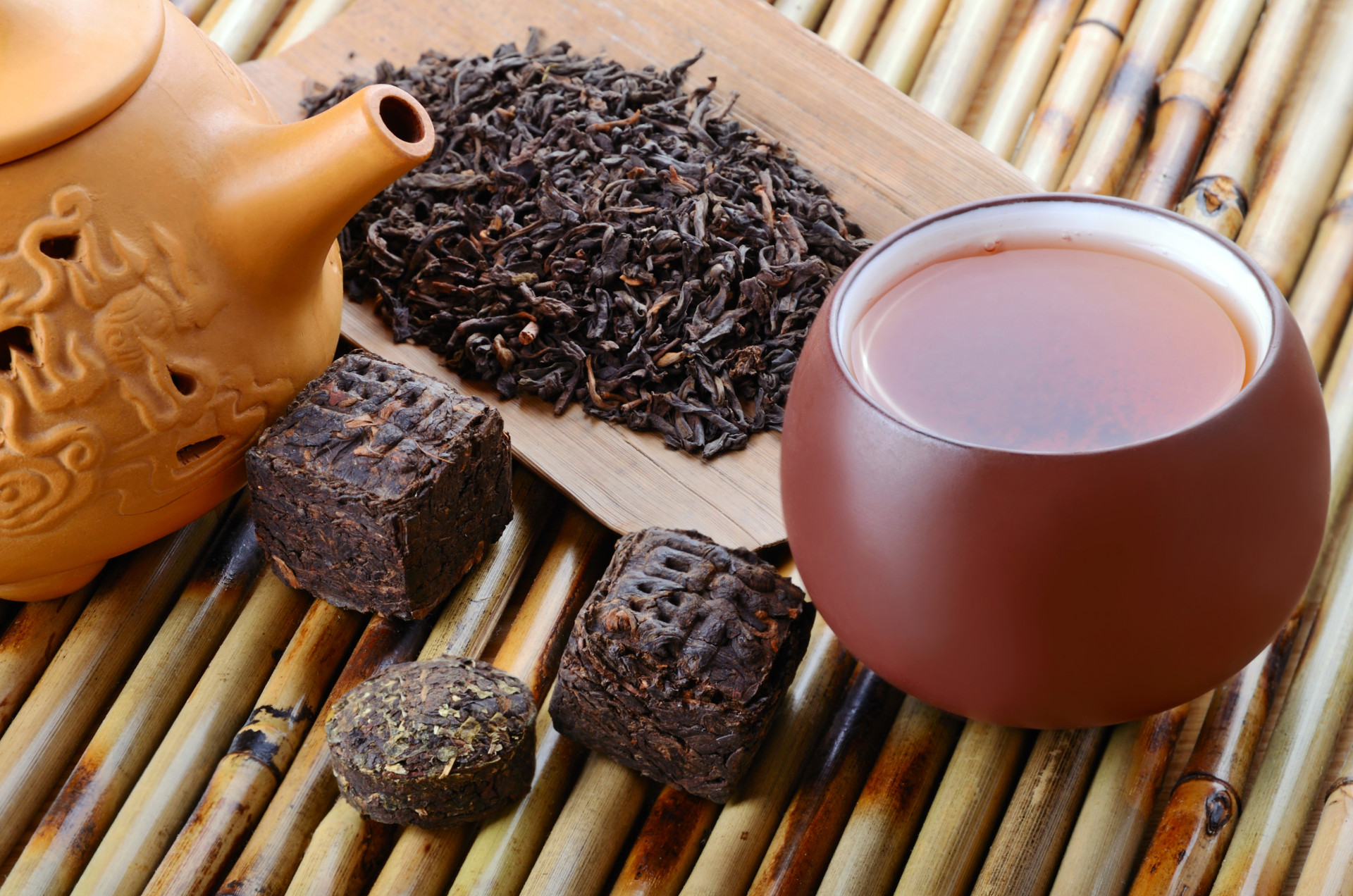
Two production methods
- Shou Pu Erh: accelerated, machine-controlled aging
- Sheng Pu Erh: traditional long-term aging over 2 to 50 years
Processing
The leaves are harvested, laid out to wither, and lightly steamed to stop fermentation and preserve the greenness as so-called Maocha. The tea is then pressed into shape. Over time, microorganisms form at the breaking points of the leaves, allowing the tea to age – natural long-term aging is considered particularly high-quality.
Taste
Through aging, Pu Erh develops an elegant, sweetish aroma with nuances of flowers, herbs, and fruits, as well as a hint of tartness.
Preparation
Many tea lovers start with a short “rinse” with boiling water, which is discarded after a few seconds. The subsequent infusions are drunk, with a steeping time of two to four minutes – Pu Erh can be infused multiple times.
Storage
Unlike most other teas, Pu Erh is deliberately designed for long-term storage: dry, airy, and without strong odor sources nearby, so that the aging process can continue for years.
Discover more topics