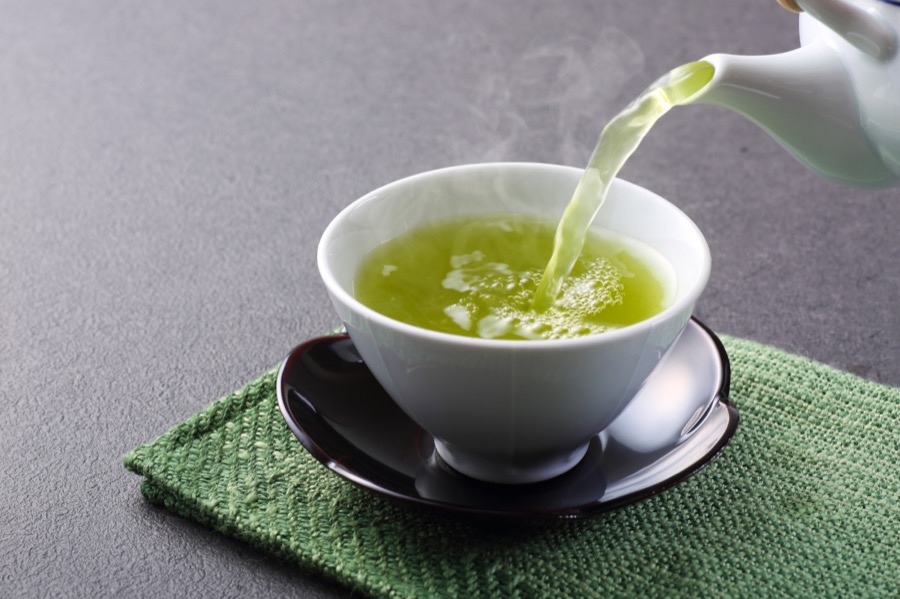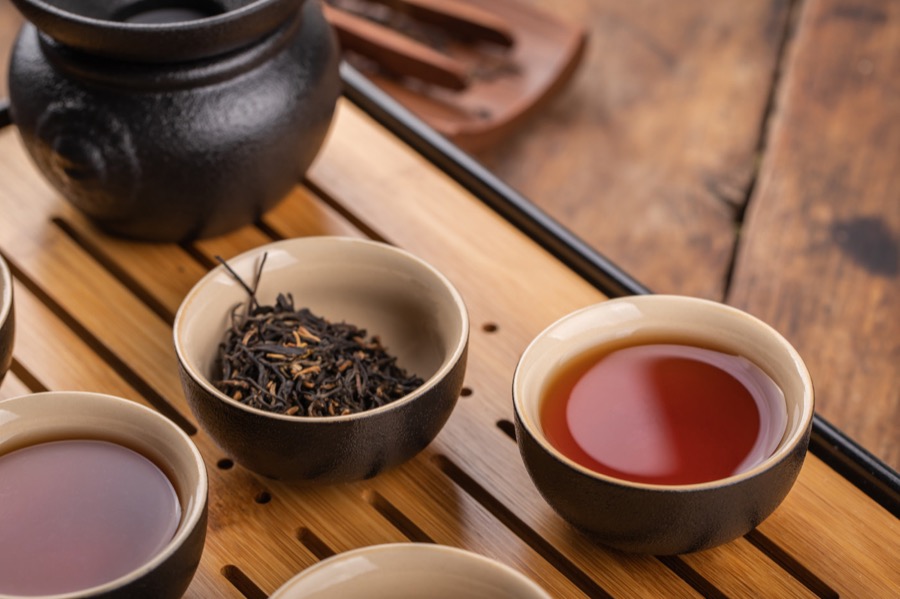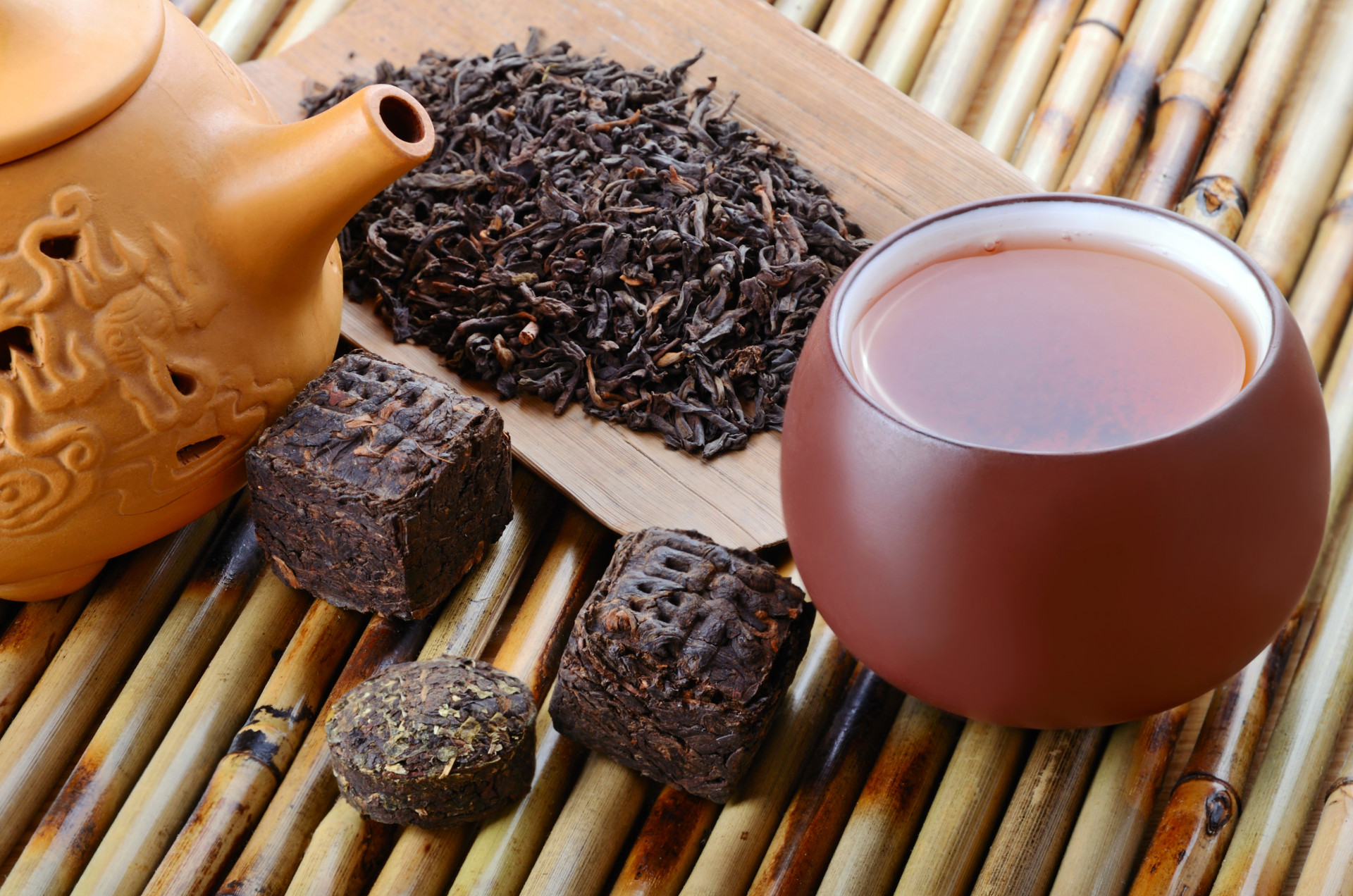
Oolong is a semi-oxidized tea whose oxidation level falls between green and black tea. It originally comes from the Wuyi Mountains in China’s Fujian Province – its name means “black dragon.” The Da Hong Pao tea bush variety is considered the mother plant of many modern oolong varieties, now also cultivated in Guangdong and Taiwan.
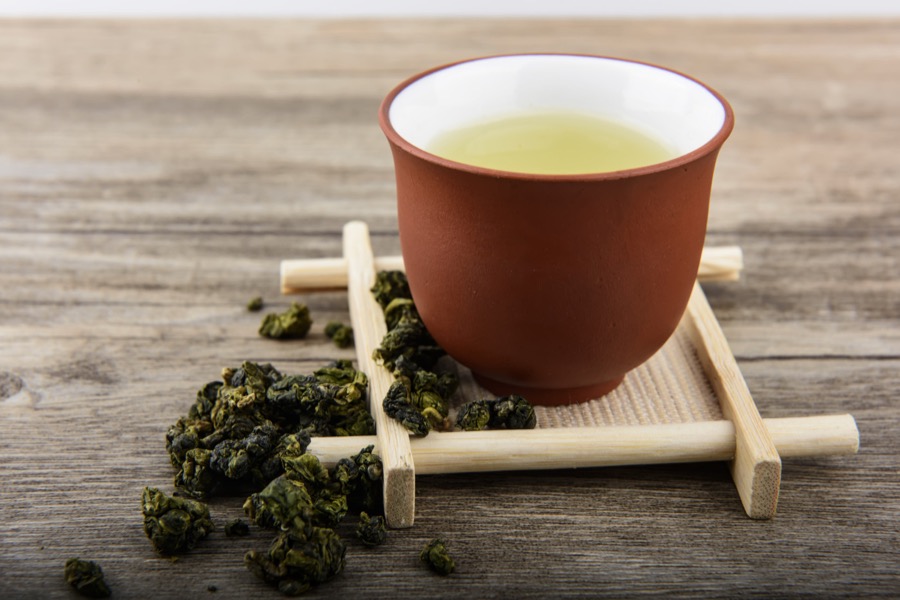
Harvest and Processing
Oolong can be harvested up to four times a year, with the finest qualities produced in spring and late autumn. Harvesting is done exclusively by hand, with larger leaves than other tea types. After brief withering in the sun, a resting phase follows during which oxidation begins: the leaves are bruised, shaken, and tumbled in drums multiple times. The duration and frequency of these steps determine the oxidation level. The tea is then heated to stop fermentation, followed by rolling and roasting.
Flavor
Depending on oxidation level and roasting, oolong tastes nutty and floral or more malty – a light oxidation level emphasizes the floral notes, while a strong one brings out the malty notes.
Preparation
Infuse with water heated to 90 to 100°C. In a gaiwan or Yixing teapot, oolong can be infused up to eight times, with the aroma changing from infusion to infusion.
Storage
Store in a cool, dry, light-protected place in an airtight container.
Discover More Topics