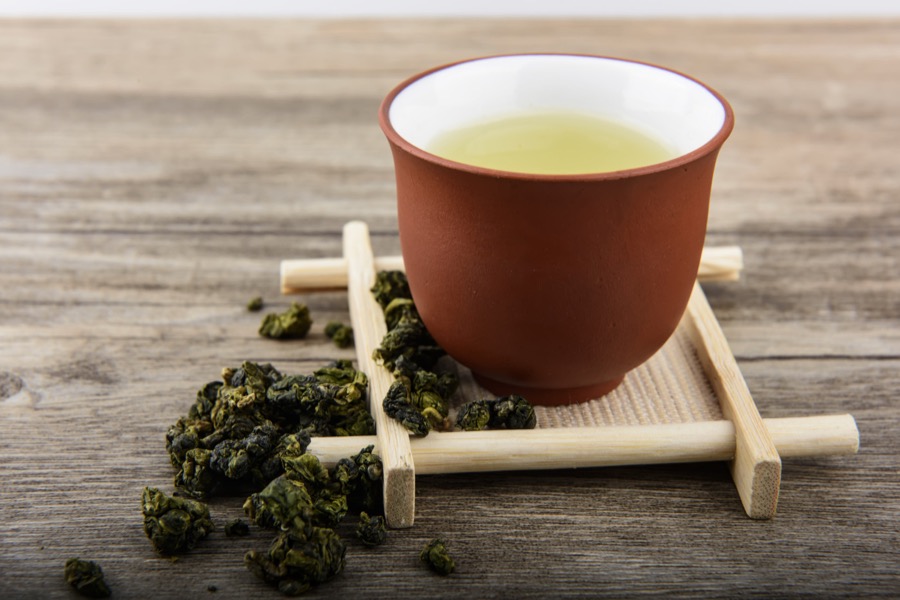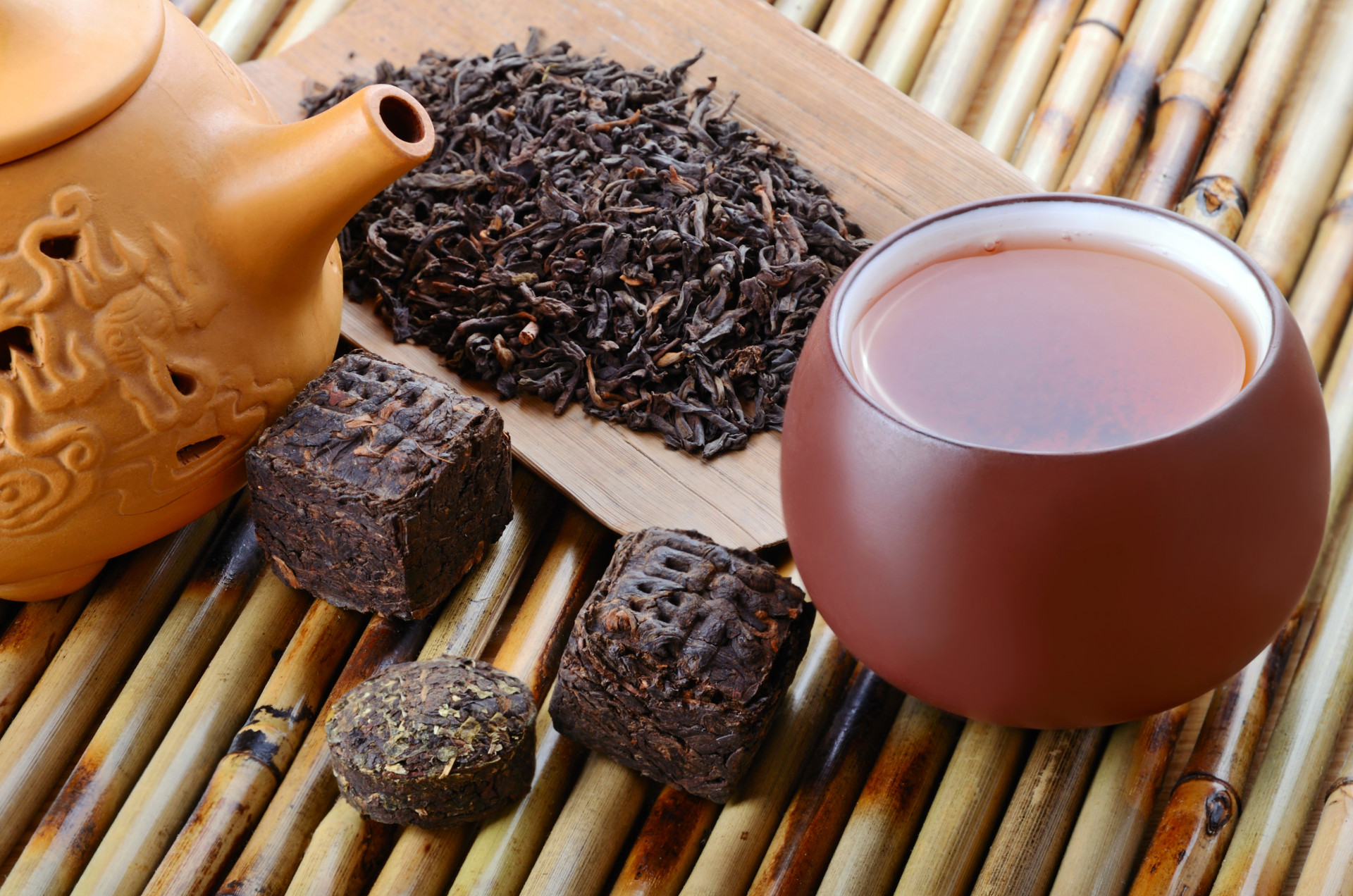
Black tea—also known as red tea in East Asia due to the color of its infusion—comes from the same plant as green tea (Camellia sinensis or Camellia assamica). The difference lies solely in the processing: black tea is fully fermented, while green tea remains unfermented. It is grown worldwide, particularly in Sri Lanka, the Indian regions of Assam and Darjeeling, Japan, China, and Kenya.
Well-known Origins
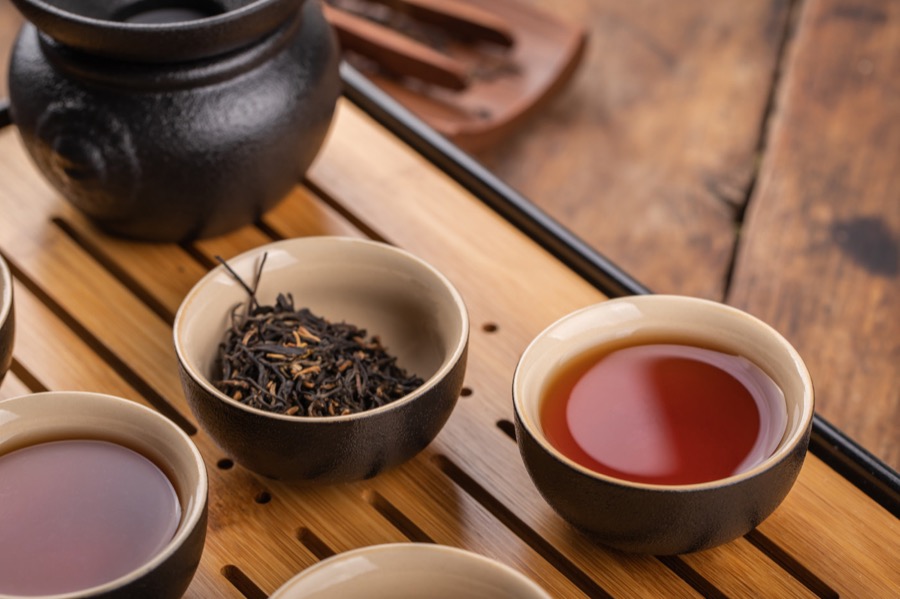
- Assam: dark brown color, bold, malty aromas
- Ceylon: reddish infusion, refreshing and delicately spicy
- Darjeeling: golden-brown hue, mild and elegant in flavor
Processing
The two youngest leaves and the top bud are harvested by hand. Natural withering—lasting up to 18 hours, or about half as long with fans—removes around 30% of the moisture. During the subsequent rolling process, the leaf is broken open, which initiates oxidation. Fermentation in a heated room leads to the characteristic dark coloring, followed by hot-air drying, sorting, and quality classification. The type of fermentation is a decisive factor in the flavor and quality of the finished tea.
Flavor
Flavor profiles range from bold and spicy to malty or floral, depending on origin and processing.
Preparation
The steeping time shapes the character of the cup: in the first two to three minutes, the aroma primarily unfolds; after about three minutes of steeping, the tannins become more prominent.
Storage
Store in a cool, dry, dark place and keep tightly sealed.
Discover more topics