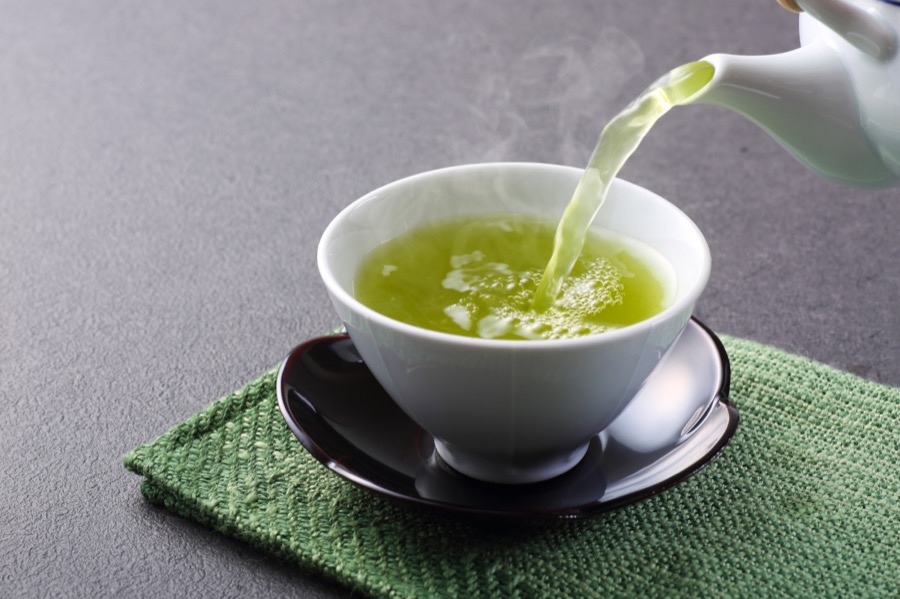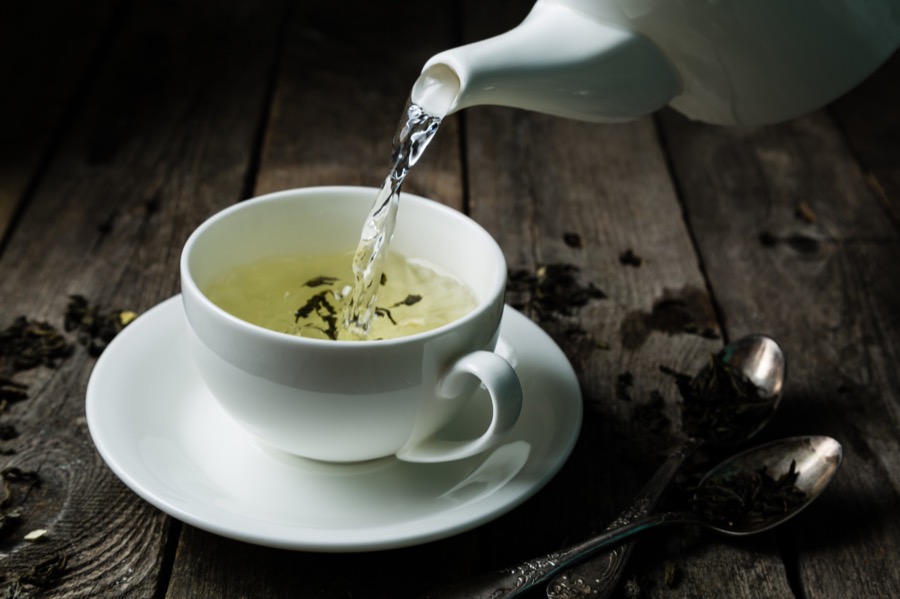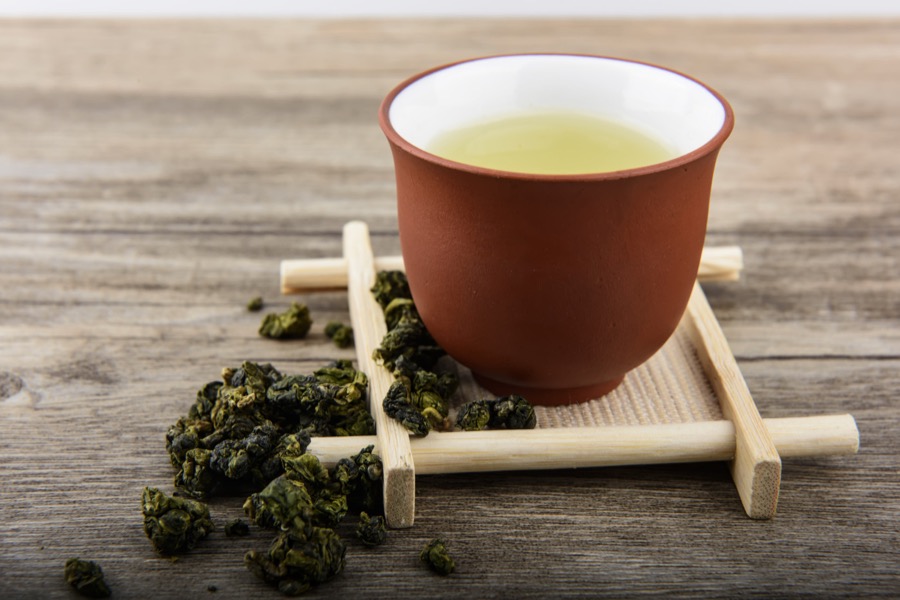
Yellow tea is an extremely rare type of tea made from the tea plant (Camellia sinensis). Its degree of fermentation lies between white and green tea, at around 20% oxidation. The name comes from the straw-yellow color of the infusion and from its historical association with the Chinese imperial court, for whom yellow tea was long reserved due to its rarity. To this day, high-quality yellow tea is produced exclusively in China, on Jun Shan Island (Jun Shan Yin Zhen) – in Europe, it is a true rarity.
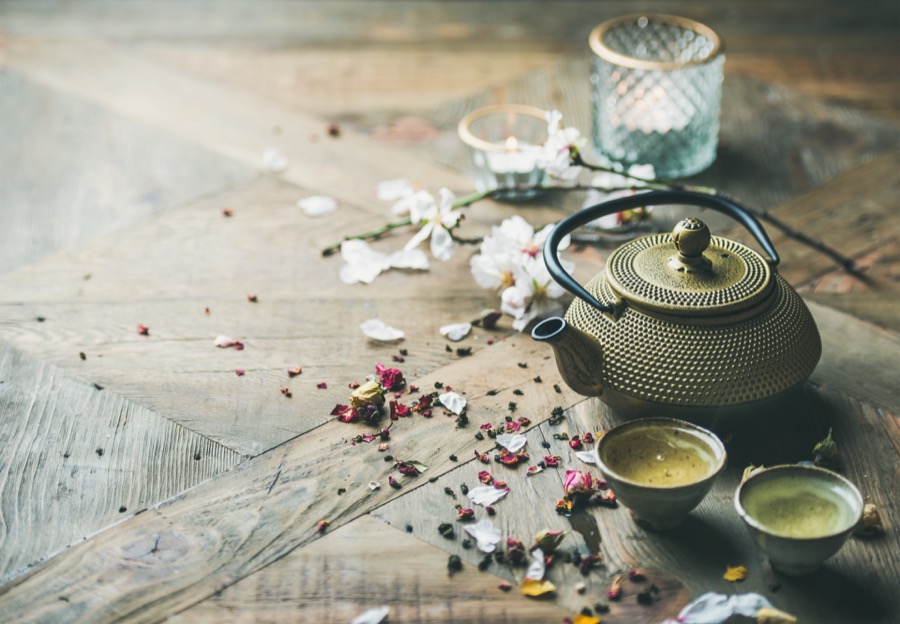
Harvesting and processing
Harvesting takes place early in spring: hand-picked, still-closed leaf buds that are first lightly withered. Further processing is similar to green tea, with one crucial additional step: after heating, the leaves are wrapped in cloth and left to rest. This heating and resting is repeated over three days and creates the so-called yellow sealing, a very gentle fermentation. Finally, the tea is dried, sorted, and graded. Only a few tea masters have mastered this elaborate production method.
Flavor
Yellow tea develops a sweet aroma with delicate fruity notes such as mango or papaya, sometimes also nutty-malty nuances – grassy or green notes are absent. The infusion color ranges from golden yellow to honey-colored.
Preparation
Infuse with water below 80°C and steep for two to three minutes. Multiple infusions are possible and reveal different facets of the aroma.
Storage
Store in a cool, dry place, protected from light, and tightly sealed.
Discover more topics